
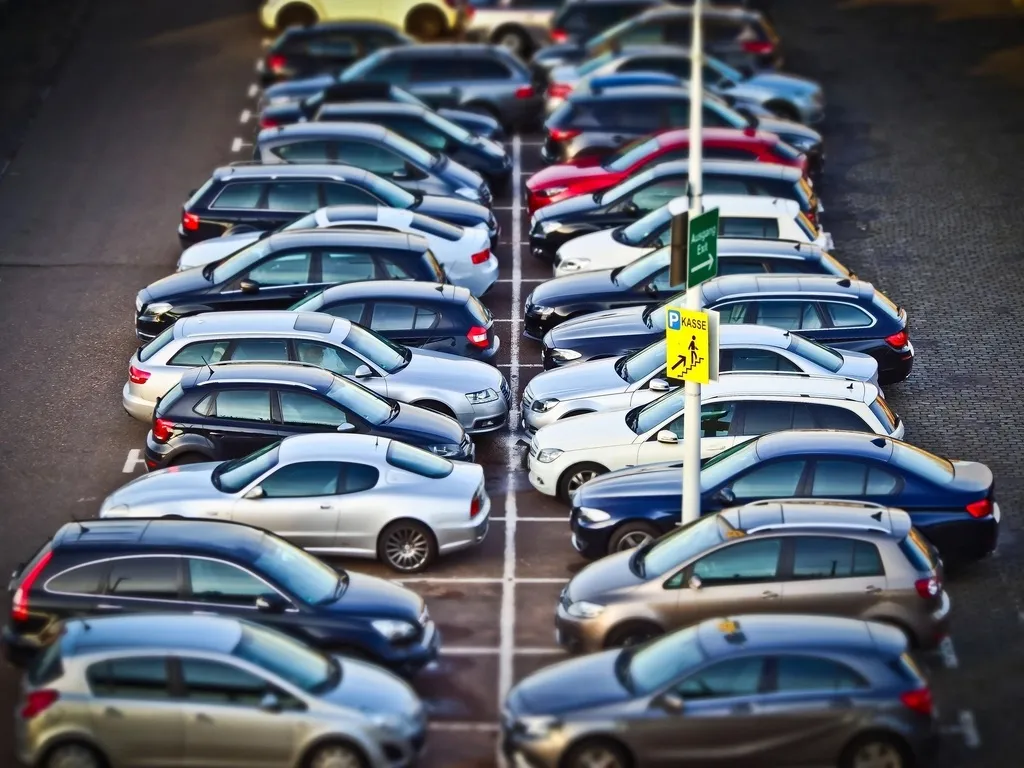
If you live in an older town centre or work in a building with too small a car park, you know the scene by heart. People double-park because there is no other option. In the morning someone needs to get out, and in front of them sits a car whose owner they have never met.
The horn follows. Then another one. Then someone opens a window and shouts. By the time the owner appears, half the street is awake, and two people who until then had simply passed each other are now exchanging looks.
The problem is not the parking, it is having no way to reach each other
Nobody blocks an exit out of malice. Nine times out of ten the person simply had nowhere to stop and reckoned on being back before anyone needed to move.
The only tool that has existed for this situation is the horn — an instrument designed to be heard by an entire street, used to address one person. That is where all the friction comes from.
What a sticker on the windscreen changes
A QFaar sticker on the windscreen carries a QR code. Whoever needs to get out scans it with their phone and a web page opens — nothing to install, no sign-up. They pick the message “You have blocked me in, could you move your car?” and it reaches the owner as a notification.
The owner gets it on their phone within seconds. Nobody was woken, nobody shouted, and the car moves two minutes later.
Your phone number stays where it is
The classic alternative is a scrap of paper under the wiper. It solves the same problem, but your number stays visible to everyone walking past — couriers, passers-by, people photographing number plates.
Through QFaar the exchange goes through the app. The person who scanned the code does not see who you are, does not get your number, and cannot send you anything beyond the prepared messages.
When you know you will be a while
If you park somewhere you will clearly be in someone’s way, you can put a status on the vehicle — a short note such as “Back in 10 minutes”. Whoever scans the sticker sees it along with a countdown of how much longer it holds. You choose the duration, and when it expires the status disappears.
The difference is that the person blocked in immediately knows where they stand. Ten minutes of waiting with that information is a very different thing from ten minutes of waiting with no idea when anyone is coming back.
It is not only blocked exits
The same code covers the rest of what happens in a crowded street: lights left on, a window open in the rain, a tyre visibly losing air, someone catching your wing mirror on the way out. All things a passer-by would tell you if there were any way to.
The sticker comes free with Faar. You stick it on the inside of the windscreen and link it to your vehicle in the app — it takes a minute, and that is all there is to it.